

How community gardening works in Singapore and what is it
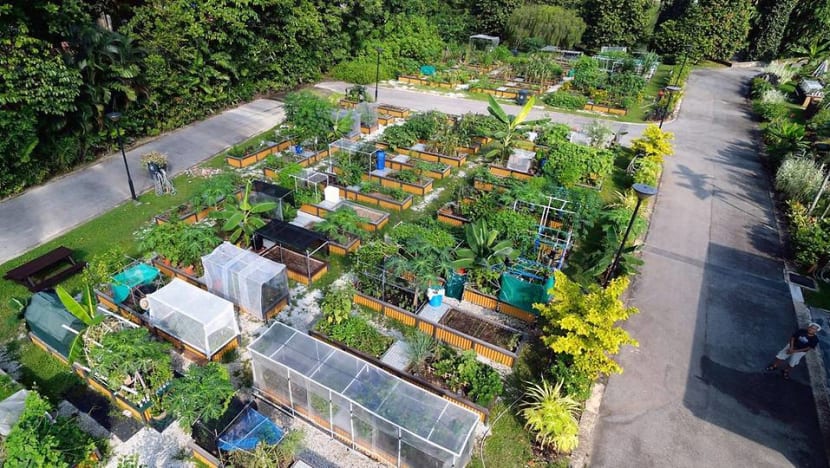
Finding a place to grow food in Singapore can feel like a bureaucratic puzzle. While the desire to plant is high, the land is managed tightly. You cannot simply dig up a patch of grass in your estate. However, there are established systems designed to get residents into the garden. Understanding how these work is the first step toward getting your hands dirty.
Gardening in Singapore is structured, regulated, and more varied than it first appears. From formal allotment plots to volunteer-run neighbourhood gardens, each model comes with its own trade-offs in access, responsibility, and community life.
The National Parks Board (NParks) Allotment Scheme
The most formal way to garden in Singapore is through the NParks Allotment Gardening Scheme. These are dedicated spaces in parks like Garden by the Roof, Punggol Waterway, and other heartland parks.
How it works
NParks provides raised planters, usually measuring 2.5 metres by 1.5 metres. These are leased to individuals for a period of three years at a fixed cost. More details are available on the NParks Allotment Gardening page.
This is a relatively solitary way to garden within a public space. You manage your own plot, keep your own harvest, and take responsibility for upkeep. It suits people who want autonomy over what they grow, but it offers less in the way of shared labour or neighbourly collaboration.
Resident Community Gardens (RC and RN)
Most community gardens in HDB estates are managed by Residents’ Committees (RC) or Residents’ Networks (RN) under the People’s Association. These are often the centre of local growing culture.
Examples include City Sprouts Punggol, Goodman Community Farms by Cultivate Central, and Trivelis Community Garden.
How it works
These gardens are usually fenced off and located at the foot of HDB blocks or on top of multi-storey carparks. They are managed by volunteers from the surrounding neighbourhood. Information on these spaces can be found through the Community in Bloom programme.
Participation
Unlike allotment plots, these are collective spaces. You usually do not own a specific patch. Instead, you join a group of neighbours to maintain the whole area together. This is where some of the strongest social interaction happens, but also where tensions can arise when people disagree on what to grow, how to prune, or how to handle pests.
Private collectives and social enterprises
Outside government-led schemes, a growing number of private and social enterprise models now bridge the gap between education and production.
Social enterprises
Organisations like Edible Garden City and Bollywood Farms have helped turn underused urban spaces such as rooftops, mall areas, and restaurant-adjacent sites into productive farms.
Some of these are commercial operations, while others offer workshops, memberships, or citizen-farm experiences that allow residents to learn by doing.
School and workplace gardens
Many schools now use learning gardens as part of their curriculum, and some workplaces have begun to include edible gardens in staff wellness programmes. These spaces are usually closed to the public and intended for students or employees within that institution.
Rooftop and vertical farming initiatives
As ground-level space becomes scarcer, Singapore is increasingly looking upward. The Singapore Food Agency (SFA) has tendered rooftops of multi-storey carparks for commercial urban farming.
These projects are mainly designed to strengthen food resilience, but some include a community-facing element such as local hiring or public engagement plots. They often rely on vertical systems, hydroponics, and controlled growing methods that differ significantly from soil-based neighbourhood gardening.
Guerilla gardening and informal spaces
Technically, gardening on state land without permission is not allowed. Even so, informal gardening is a familiar sight in Singapore.
Corridor gardens
The HDB corridor garden is one of the most accessible forms of gardening in the city. It is generally tolerated as long as fire-safety access is maintained. The relevant requirements can be found in the SCDF Fire Safety Guidelines.
This is where many beginners start, using pots, racks, and small containers to grow herbs or ornamentals on a manageable scale.
Informal plots
Informal gardens also appear in patches of soil in older estates or on verges near landed homes. They show initiative and local care, but they exist in a legal grey zone. Unlike formal RC or NParks spaces, they do not come with any security of tenure.
Navigating the bureaucracy
The fastest way to get started is to use the Growing Roots directory, which helps identify active growing spaces and community groups across Singapore.
Other routes include:
- Finding a garden through your local Community Club (CC) and asking for the person in charge of the Residents’ Network or gardening group.
- Locating your nearest CC through the People’s Association website.
- Applying for a formal plot through the NParks Allotment Gardening Scheme when applications open.
Starting a new garden from scratch is possible, but it usually takes time. You may need to organise committed neighbours, propose a viable site to the Town Council or NParks, and show that there is a realistic plan for maintenance and mosquito control.
Singapore’s systems are designed to reduce the risk of abandoned or poorly managed plots, so the barrier to entry is high by design.
FAQ / Common questions
How much does it cost to join a community garden?
Joining an RC or RN garden is usually accessible or free, though some groups may ask members to contribute to a shared fund for seeds, compost, or soil. NParks allotment plots cost around S$57 per year, excluding GST, for a three-year lease.
Can I sell the food I grow in a community garden?
For RC and NParks gardens, produce is generally meant for personal consumption or sharing within the community. Commercial sale is typically not allowed.
Who provides the tools and soil?
In community gardens, tools are often shared and kept in a common shed. In allotment plots, individuals are usually responsible for their own tools, seeds, and fertiliser.
What happens if I move house?
For allotment plots, you can surrender your lease, but it is not transferable to a new location. For RC gardens, participation usually ends when you leave the neighbourhood and resumes by joining a new local group.
Gardening in Singapore is structured, but there is still a path for almost every level of commitment. Whether you prefer the independence of an NParks allotment, the shared labour of an HDB community garden, or the educational model of a social farm, the key is choosing the format that fits how you want to grow.
Use the Growing Roots directory to find the closest community garden to your home and reach out to the group today.